US SME Sourcing Case Study: Eliminating Cross-Border Financial and Legal Risks via Domestic Sourcing Solutions
Cross-border procurement often seems straightforward until businesses run into hidden industry practices, complex import regulations, and severe legal vulnerabilities. Recently, Orient Wings successfully assisted a small-to-medium enterprise (SME) located in the US inland region with a custom packaging bag procurement project from China. By acting as their local trading partner, we not only resolved a critical supplier dispute but also completely eliminated their international financial and legal exposure.
The Challenge: The 50kg Discrepancy and International Trade Vulnerabilities for US SMEs
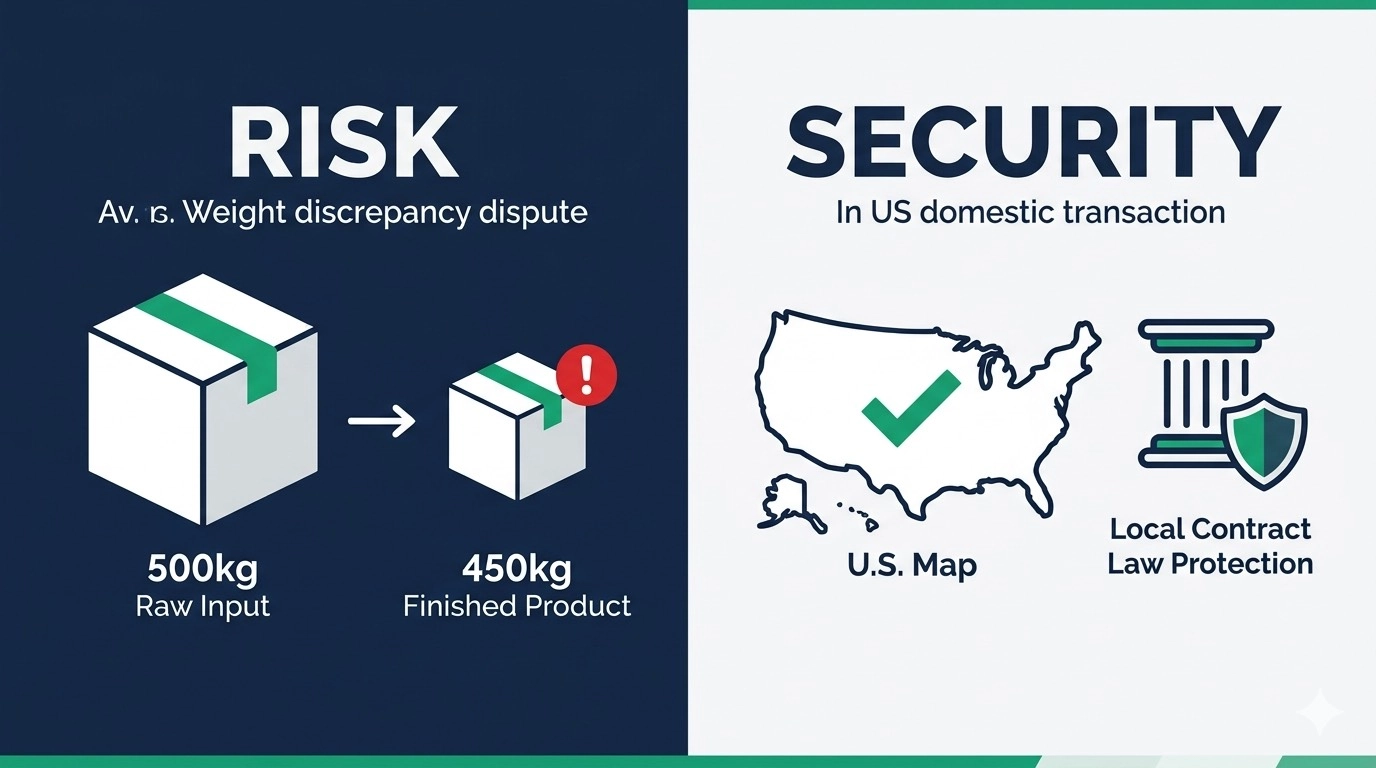
The client placed a B2B order for 500kg of finished packaging bags, expecting to receive the exact weight in final products. However, upon delivery, there was a 50kg shortage. The Chinese manufacturer explained that in their local industry practice, "500kg" referred to the raw material input, meaning the buyer had to absorb the 10% material loss during production.
This production standard caught the US client completely off guard. For an inland SME, resolving this supply chain dispute internationally was nearly impossible due to several compounding risk factors:
- Logistical Barriers: An inland SME lacks the direct infrastructure to manage international litigation across borders.
- Financial Friction: The client faced ongoing hassles with international wire transfers, costly overseas banking fees, and severe currency exchange friction.
- Legal Exposure: If the overseas supplier breached the contract, pursuing legal action in an international jurisdiction was financially and logistically unfeasible.
Our Solution: How Orient Wings Implemented a Secure US Domestic Transaction Model
To mitigate these cross-border risks, Orient Wings structurally transformed how the client conducted global sourcing by transitioning the entire operation into a secure, localized business model.
Mitigating Payment Risks via Hassle-Free Domestic Transactions
We executed the entire deal as a domestic transaction within the United States. The client paid Orient Wings directly through standard domestic banking channels, completely avoiding the complexities, delays, and heavy overhead associated with international wire transfers.
Establishing US Court Jurisdiction and Contractual Protection
By signing a domestic contract with our local entity, the transaction became fully protected under US commercial laws. The client gained the peace of mind that any contractual disputes would be handled within the US court system, entirely eliminating the risk and immense cost of fighting a legal battle in an overseas jurisdiction.
Strategic Supplier Negotiation and Client Indemnification
When the 50kg weight discrepancy arose, our team immediately handled the B2B procurement dispute directly with the Chinese factory. To ensure the client’s operations and cash flow were protected, we proactively secured an immediate refund and a price credit deducted directly from their next shipment.
The Result: Bulletproof, Zero-Risk Global Sourcing for Packaging Procurement
What began as a risky international purchase was transformed into a secure, worry-free domestic transaction. By serving as both the cultural bridge with Asian manufacturers and a compliant US trade partner, Orient Wings turned a supply chain crisis into a seamless experience.
The client gained immediate financial compensation, avoided overseas banking friction, and secured local legal protection for all their future packaging sourcing needs.
Client Testimonial: "Orient Wings converted our risky international dispute into a fully protected, domestic resolution. Having a partner that commands US legal jurisdiction while managing Asian factories is a game-changer for our supply chain." — Operations Manager, US Inland Distribution SME
FAQ: Mitigating Sourcing Risks for US Domestic Buyers
Q1: Why do material weight discrepancies occur when sourcing packaging bags from China?
In Chinese manufacturing, raw material input often dictates contract weight. Local factories may include a 10% production scrap loss within the total billed weight unless a strict "net finished weight" clause is explicitly enforced by a local sourcing agent during contract signing.
Q2: How does a domestic transaction model eliminate legal exposure for US B2B buyers?
By signing a procurement contract directly with a localized trade partner rather than an overseas entity, the transaction falls entirely under US commercial law. Any breach of contract or product defect can be settled within the US court system, preventing costly international litigation.
Q3: What is the fastest way for a US SME to resolve a supplier dispute with an Asian factory?
The fastest method is utilizing a sourcing partner with a physical presence in both the US and Asia. Local teams can audit the factory, halt shipments immediately, and leverage future order volumes to negotiate immediate financial credits or refunds on behalf of the buyer.